Freedom is relational — it lives in the connections between us, not in isolation. These studies explore how meaning, beauty, and responsibility emerge through reciprocity.
Why it is built this way, and the principles it holds to: the Manifest.
When a study grows deep enough it graduates into a standalone site with its own public GitHub repo. So far one has graduated, the Tarot. The others are drafts: open to read, and still changing.
Five centuries of the cards, mapped as a genealogy — Mamluk ancestor to Marseille to Golden Dawn, held to the historical record.
From Mesopotamian omens to Ptolemy to Vedic Jyotish — the same sky, many readings, each its own grammar.
The 64 hexagrams from public-domain sources, read as a mirror rather than a fate, with a reading practice and a course.
Two small games that play over grammars: The Walk, a three-position spread, and As-If, a deck you answer before the card turns over.
The schema every grammar is built on is documented on a public page, so anyone can read, validate, or extend the format itself: the grammar format spec.
Recursive patterns emerge when simple rules or elements repeat and combine with themselves, creating increasingly complex and beautiful structures. They can manifest as fractals—where each level contains the seeds of the whole—or as complex systems, where the whole cannot be fully understood by examining its parts alone.
In complex systems, new properties emerge from the interactions between elements—properties that exist only at the level of the whole. This principle of emergence helps us understand how sense-making itself might work recursively, with each understanding building upon and transforming previous ones, creating something greater than the sum of its parts.
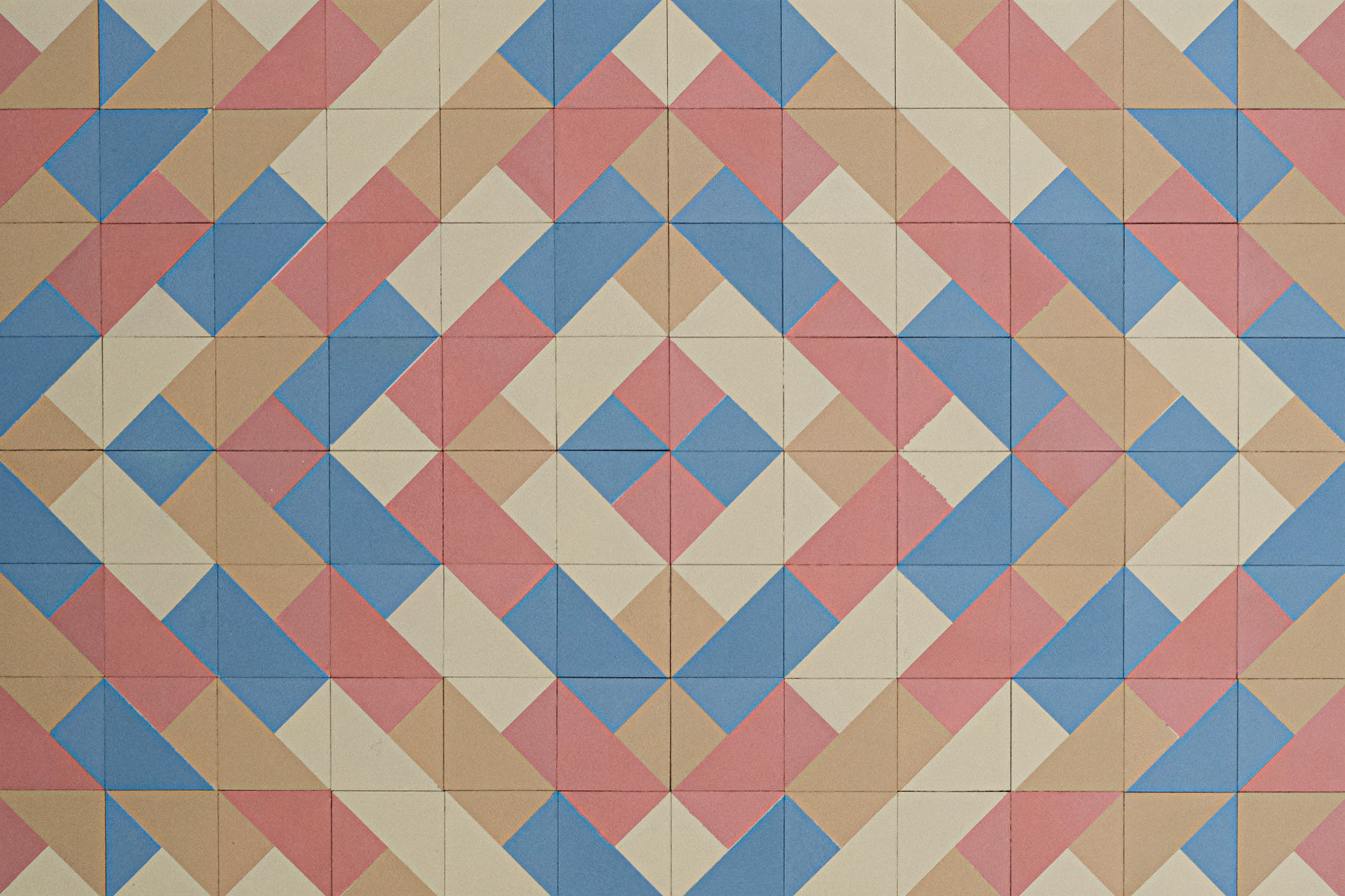
Inspired by Fernando Carnaúba's combinatorics series, where 96 unit squares can be arranged in more ways than there are atoms in the universe. The appearance of harmony within such vast possibility is a glimpse of hidden order shining through infinite chance.
Explore Patterns →Recursive spirals — how simple mathematical parameters generate meaningful visual structures through iteration. Like musical harmonies, virtuous meaning emerges when we synchronize our cycles with others.
Generate Spirals →A tree of spirals, and from the tree of spirals other trees of spirals grow, and sometimes everything disappears and it’s just a seed.
Watch it grow →“Can you make a tree of spirals? An ocean of spirals? Everything as a spiral that can be cast as a spiral?”
Cast a spiral →When emergence and iteration combine, a recursive cycle forms. Visual poems for the four movements of recursive sense-making: contemplate, learn, create, share.
View Visions →Long-form reflections on sense-making, recursive publics, and the philosophy behind the platform — two voices, Recursive and Eco, that dialogue and reshape each other rather than settling into fixed identities of human and machine.
Read the Reflections →Five doors of a book in progress: a film and a game open now, three not yet.
Open the doors →A spiraling exploration of recursive publics and Kant’s dare to know.
Read the essay →Every ad recursive.eco shows, in one place. They are ads for recursive.eco itself; there are no third-party ads.
See our ads →The patterns I check in my own work, how each one is checked, and what the last check found.
See the checks →For parents: your child watches the videos you picked, and nothing else.
Connect Claude and build playlists, decks and films by talking. Every change saved.
Start from a public-domain deck and make it yours: a mirror, not a forecast.